


The Psychology of “Eating” a Brand
Why a branded biscuit lands differently to a branded pen — and what the research says about it.
“To incorporate a food is to incorporate its properties — we become what we eat.” — Claude Fischler, sociologist, on the incorporation principle
Most branded merchandise sits on a desk or in a drawer. A branded biscuit, brownie or cake gets eaten. That difference isn’t just a nice bit of copywriting — it’s backed by decades of research into how food shapes identity, perception and memory in ways other objects simply can’t.
The incorporation principle: why eating is different
French sociologist Claude Fischler’s 1988 paper Food, Self and Identity introduced what’s known as the incorporation principle: unlike clothing, gadgets or gifts, food physically crosses the boundary between “outside” and “inside” the body. Fischler argued that to eat something is, in both a real and symbolic sense, to take on some of its properties.
Applied to branding, that’s a strong claim. A branded mug is used. A branded biscuit is consumed — taken inside the body in a way no other piece of merchandise ever is. It’s a more intimate, and more memorable, brand interaction than almost anything else a business can hand someone.
Brand transference: traits rub off on the person, not just the product
Research into trait transference, published in the Journal of Business Research, found that when people were incidentally exposed to a brand, its perceived personality traits measurably shaped how observers judged the person associated with it. In plain terms: the qualities people associate with a brand don’t stay with the logo — they transfer onto whoever is holding, wearing or eating it.
For corporate gifting, this cuts both ways. Hand someone a mass-produced, generic item and that’s the impression that transfers. Hand them something genuinely well-made, and the polish, care and quality become part of how they see your business — before a single word is said.
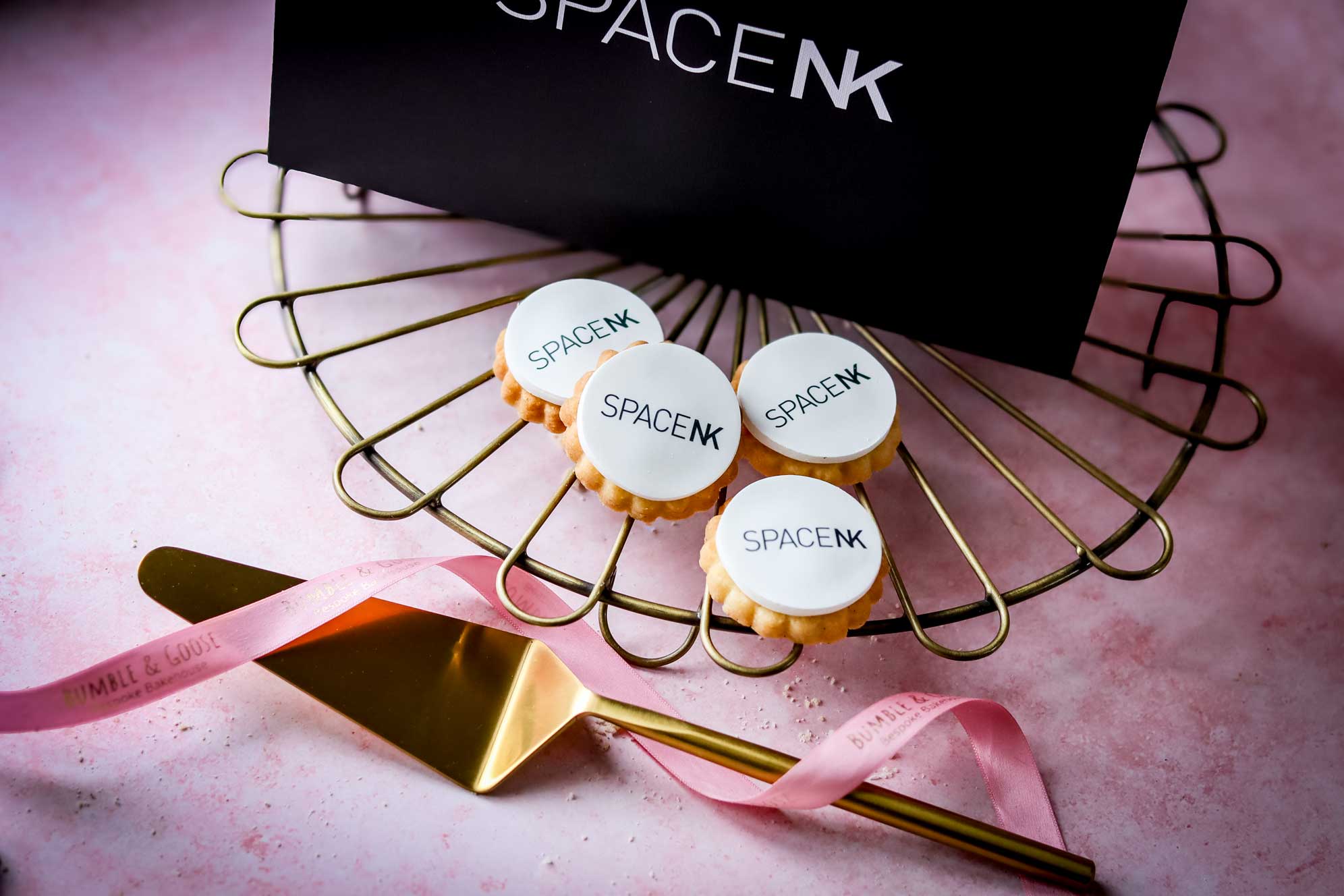
Corporate Gifts – Individual Branded Logo Biscuits
Your logo, hand-iced onto a biscuit made to be kept and remembered — not stamped and forgotten.
Multisensory experience: why a biscuit beats a banner ad
Consumer psychology research on brand experience (Brakus et al.) describes brand interactions as operating across three dimensions at once: sensory, affective-cognitive, and behavioural. A digital ad engages, at best, sight and maybe sound, for a few seconds. Eating a branded biscuit engages sight, smell, touch and taste simultaneously, over several minutes — and requires an active behaviour (unwrapping, breaking, eating) rather than passive scrolling.
That’s a fundamentally richer brand encounter than almost any digital channel can offer, which is part of why edible marketing tends to be remembered long after the impression itself has gone.
Sensation transfer: brand information changes how things actually taste
Studies on sensation transfer, published in Food Quality and Preference, have found that brand and packaging information doesn’t just shape opinion after the fact — it measurably changes how food is perceived to taste in the moment of eating it. The expectation set by the brand becomes part of the sensory experience itself. Put simply: what someone believes about your brand going in genuinely affects how good your biscuit tastes going down.
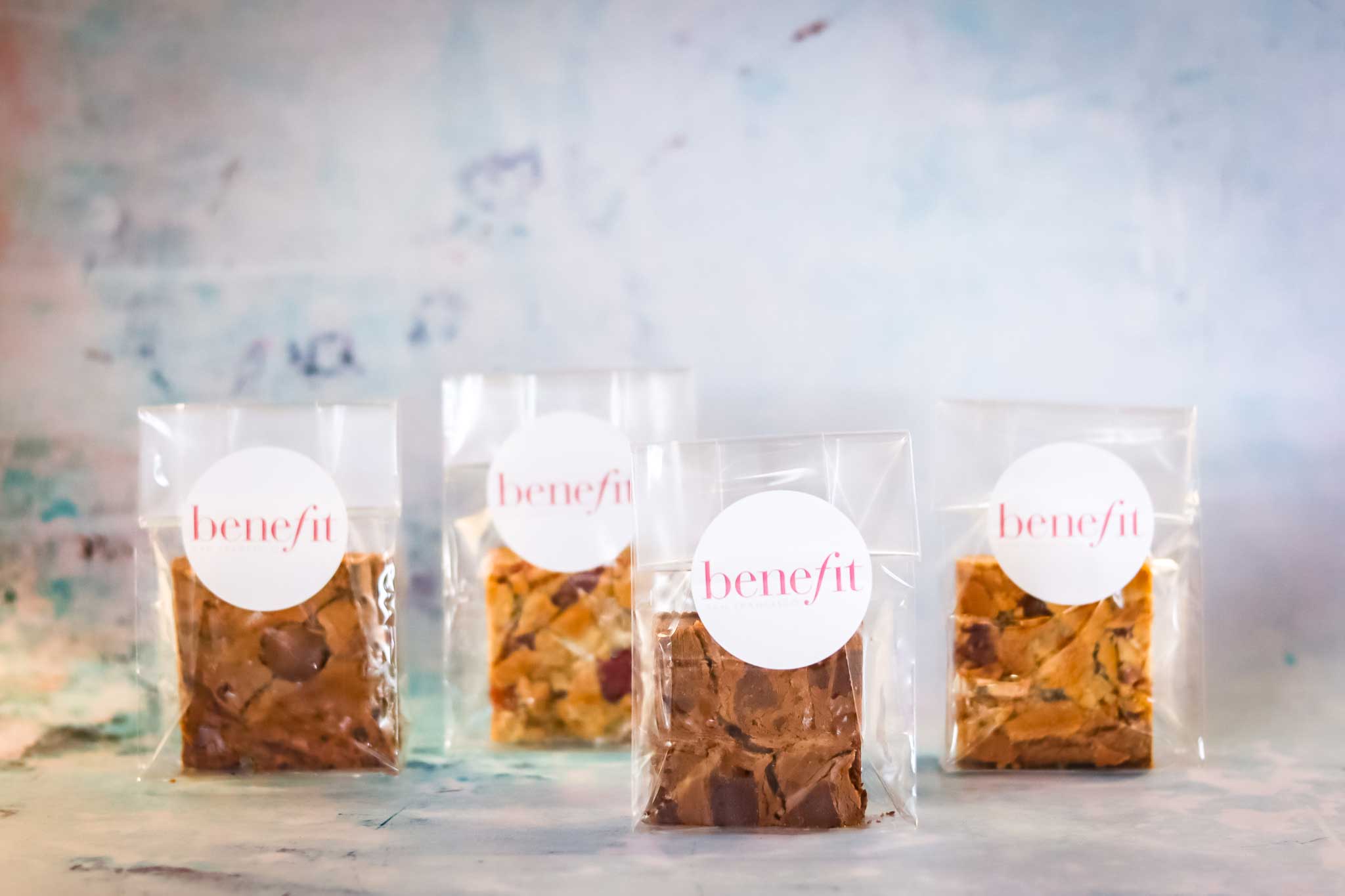
Individually Wrapped Brownies
Unwrap, break, bite — a fudgy, hands-on brand moment that engages far more than a glance at a screen ever could.
The recall data: how edible marketing stacks up against digital
The Advertising Specialty Institute’s 2026 Global Advertising Impressions Study, surveying nearly 5,000 consumers, found that promotional products generate around 3,300 brand impressions over their lifespan at a cost of roughly £0.006 per impression, with 85% of recipients able to recall the advertiser. That’s a stronger recall rate than most digital or broadcast advertising achieves.
Edible items add a layer conventional merchandise can’t: they’re not just kept and seen repeatedly, they’re actively consumed and, thanks to incorporation and trait transference, genuinely absorbed into how the recipient perceives the brand. For more on how this plays out in practice, see our guides on what edible marketing is and real edible marketing examples.
Our take: why the product itself has to earn the trait transfer
If trait transference is real, the logic runs both ways. A logo on a rushed, mass-produced bake transfers exactly that impression — generic, low-effort, forgettable. A logo on something genuinely well made transfers the opposite.
That’s the thinking behind how we build every branded biscuit, logo brownie and branded cake we make. Everything is handmade in small batches rather than mass produced, with no preservatives added — a shorter shelf life, but a genuinely fresh, considered product on the other end. When your logo is what someone is about to eat, the quality of that bite is doing more brand work than almost anything else you could hand them.

Branded Cakes – Individually Boxed
Handmade, individually boxed and finished with your logo — the premium end of the brand transfer, done properly.