


Knowing edible marketing works is one thing. Actually planning it well is another. Most brands’ first attempt is a single, well-meaning order around Christmas, then nothing for the rest of the year, which means the goodwill it builds never gets the chance to compound.
If you haven’t already, it’s worth reading what edible marketing is and the psychology behind it → first. This page picks up from there: a practical framework for planning a strategy that actually gets used, rather than a one-off gesture.
1. Start With the Moment, Not the Product
The most common mistake is choosing a product first and working backwards. Better to start with the moments in your business calendar that already deserve marking, client renewals, new starters, product launches, conference season, end of financial year, and only then decide what format fits each one. A gift tied to a genuine moment lands as thoughtful. The same gift sent with no clear reason lands as a marketing spend.
2. Match the Format to the Goal
Different formats do different jobs. Our full examples guide → covers this in more depth, but as a starting point:
- One big, memorable moment: personalised biscuits, designed specifically around that occasion.
- A repeatable, ongoing touchpoint: branded cookies, simple to reorder without a fresh design each time.
- Gifting at scale: individually wrapped brownies, built to travel and stay branded in transit.
- A moment about one specific person: branded cakes, individually boxed.
- A campaign you actually need to measure: QR code biscuits, the one format that gives you real, countable engagement data.
Not sure which format fits your calendar? Let’s map it out together.
3. Build a Gifting Calendar, Not a One-Off Order
A single gift builds a moment of goodwill. A recurring calendar of well-timed gifts builds a relationship. Map out the fixed dates you already know about (renewals, financial year end, key client anniversaries, seasonal moments) alongside the ones that come up as you go (a new starter, a completed project, an unexpected thank-you), and treat both as part of the same ongoing strategy rather than separate, occasional decisions.
We Practice What We Preach: The Birthday Club
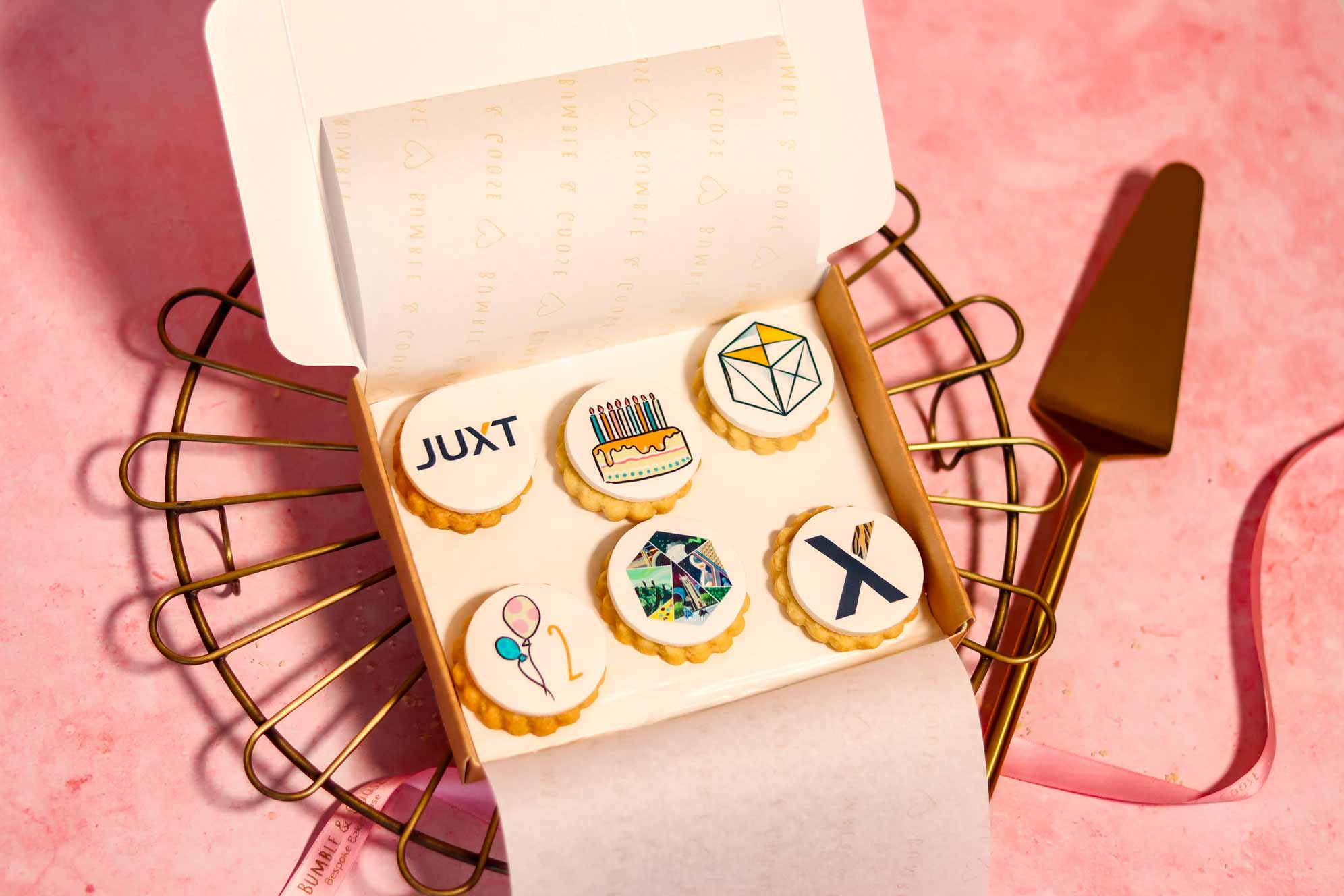
This is exactly the trap employee birthdays fall into: someone in HR means to keep track, a spreadsheet gets started with good intentions, and a few months in, birthdays start slipping through. Our Birthday Club exists to solve precisely this. Send us your team’s birthdays once, and we handle the rest, scheduling, personalising, and delivering a treat to each person on their actual birthday, automatically, with one simple monthly invoice rather than a fresh decision every time. The photo above is a two-year work anniversary box we made for the team at JUXT, part of an ongoing programme rather than a one-off order.
It’s a good illustration of the calendar principle above taken to its logical end: set the system up once, and the goodwill compounds without needing to be remembered each time.
4. Personalise as Deeply as the Relationship Deserves
A generic logo biscuit sent to a hundred people does a job. A biscuit designed around a specific client’s brand colours, or iced with a genuinely personal message for one new starter, does a different job entirely. The depth of personalisation should scale with how important the relationship is, save the fully bespoke design work for the moments and people where it matters most, and use simpler, repeatable formats for everything else.
5. Build in Lead Time
Bespoke, hand-finished work takes longer than a same-day merchandise order, and that’s exactly why it feels different when it arrives. Depending on what else we have on, we can sometimes turn a custom design around in as little as a couple of days, but we’d always recommend getting in touch early to talk through timing. Once a design’s signed off, repeat orders from it can be turned around quickly, which is exactly what makes the calendar in step 3 so manageable once it’s set up.
6. Measure What Actually Landed
Edible marketing doesn’t come with open rates or click-through data by default, so it’s worth deciding upfront what “worked” will look like:
- Direct engagement: if you’re using QR code biscuits, scan counts give you a genuine number to track.
- Social mentions and tags: a simple search of your brand name alongside “biscuit” or “cake” on social platforms after a campaign.
- Relationship signals: repeat enquiry rate, renewal conversations, or direct feedback from the clients and employees who received it.
None of these need to be perfect. The point is picking at least one before the campaign goes out, rather than trying to work out afterwards whether it was worth doing.
Ready to build a gifting calendar that actually gets used?
See the full range this strategy draws on in our edible marketing examples guide →